
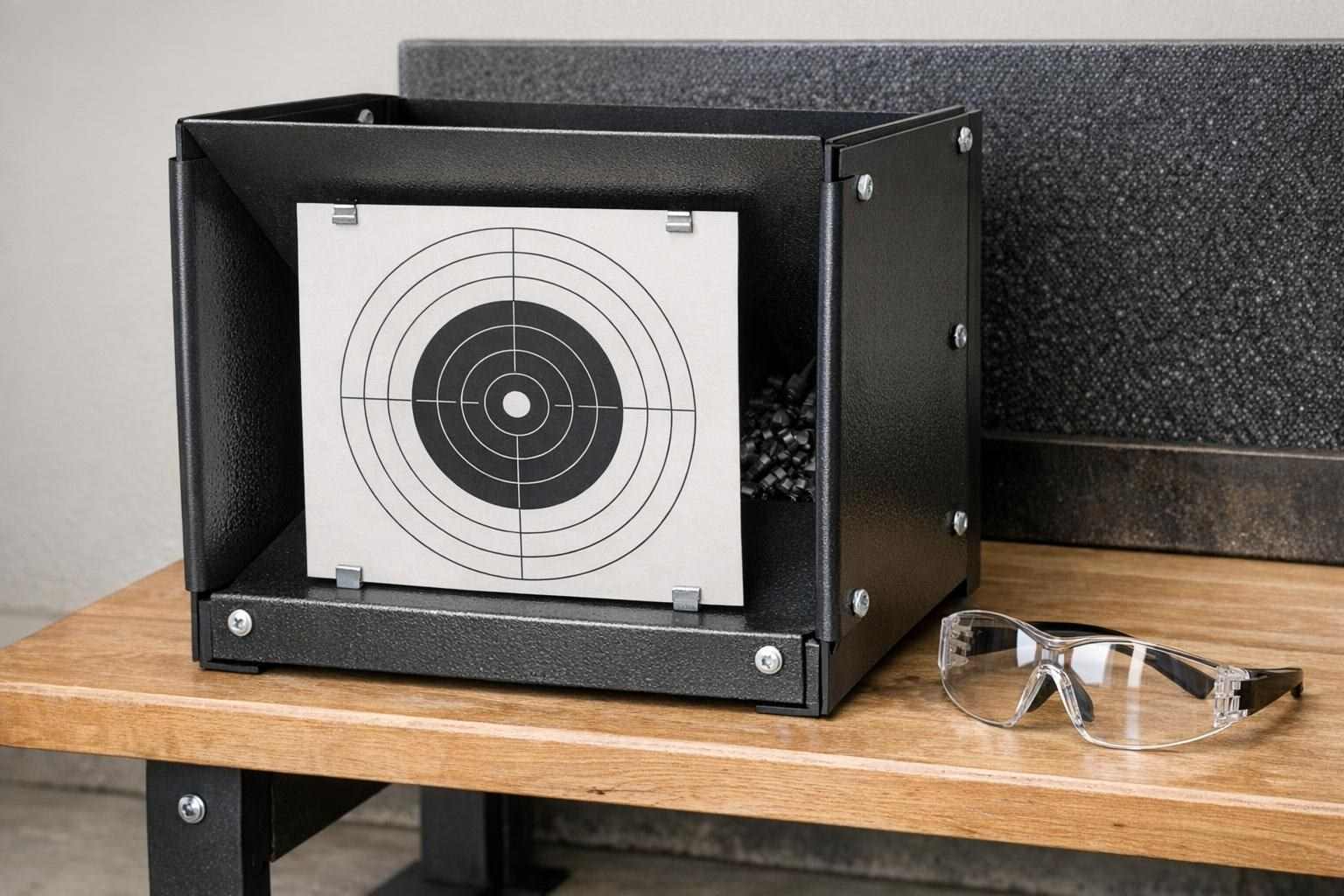
Convenience can often be compromised for useful functionality in shooting. Practice with an indoor setup makes for excellent target work, but hanging a target on a wall does not constitute a safety system. Every shot must be contained, the space protected from damage, and noise minimized. Finding the right pellet trap for one's specific use can make for a good purchase but needs to be chosen with the airgun, projectiles, shooting distance, and available space taken into account.
Start with the projectile and the airgun
The main consideration when choosing a target for indoor practice is the airgun and the ammunition that will be used for regular target practice. What works well for light target practice with pellets is not necessarily suitable for powerful air rifles. In addition to the type of projectiles that the target is designed for, it is also important to check the recommended power limit for the target as well as the recommended materials for the target.
BBs are very hard ammunition. Their behavior when hitting a surface is very different from that of pellets. Thus a target that is safe for pellets may not be safe for BBs. Do not mix up different airguns, targets and ammunition traps. Assume the worst case.
Inspect the airgun for any possible blockages in the barrel. Also, make sure all parts of the airgun are functioning properly. Make sure the safety is engaging and disengaging properly. Always keep the muzzle of the airgun pointed at the target during loading, shooting and unloading of ammunition. Even low powered airguns are considered real weapons and should be treated with respect.
Choose containment before convenience
A useful pellet trap is one which contains the projectile(s) fired and limits any possible ricochet, splashback or escape from the rear and/or sides of the trap. It is also very important to select a target of suitable size and of suitable construction to contain the type of ammunition you shall be firing (as specified by the manufacturer).
Note that even the best pellet trap is no substitute for a safe backstop. So be sure to position the pellet trap in front of a safe backstop such as a brick or cinder block wall, and keep the muzzle of the air rifle pointing towards the pellet trap at all times. Be sure to avoid shooting towards fragile surfaces, shared walls with neighbors, and areas with glass, pipes, wiring, and expensive equipment. Other surfaces to avoid shooting towards include:
Paper targets should be mounted to the target firmly and be solidly set against the back of the target. Do not use loose pieces of cardboard or some strange metal plate. Do not use unknown materials. Tears or looseness of old targets at the edges of shots, or Target's deformation – throw away such targets.
Plan the room like a small range
Ensure adequate clearance around the range so that when firing, you are never pointing the airgun muzzle at people. Even when you have closed all the doors and windows, occasional stray pellets can travel far. Instruct all bystanders not to enter the shooting line area until you indicate that it is safe for them to do so.
Mounting to a stable surface such as a wall, floor, table or tripod is essential. Do not use a wobbly support as it will move about when struck. Shooting positions should be kept to a minimum and the firing line should be clearly defined in front of the trap. Clearance around the firing position of the shooter should be kept on the floor for shooting equipment etc.
Be aware that shooting produces a lot of noise. In addition to the sound of the shot itself, the gun's action, the projectile hitting the target and the vibrations in the target all produce additional sound which can travel through walls and floors. A good airgun pellet trap should be designed to minimize this kind of noise. Good lighting is also important – not just for shooting accurately but also to ensure that you can see the muzzle of the gun, the loading area, the target face and the floor around the target. Eye protection is required for anyone in the room where you are shooting. Also, be aware that repeated impacts can produce sounds of a much greater intensity than a single shot. Therefore, consider the use of hearing protection.
Manage noise, dust and room damage
When firing an airgun for practice inside a room there is more than just the bullet impact to consider. The sound of the airgun being fired, the impact of the target and the vibrations of the trap all travel through the floors and walls of the surrounding rooms. Be aware of the rooms surrounding where you will be practicing and take steps to minimize the noise. If the trap makes a lot of noise when it is fired then look for a different model or consider ways to support it to minimize the sound. Do not cover up a noisy trap with cushions etc. as this could block the bullets and have adverse consequences.
Dust and other fragments are also to be controlled. Used ammunition and debris from the target should be picked up carefully and the air to be swept free of dust. Wash your hands after handling used ammunition or target debris. Refer to the manufacturer's instructions for cleaning the trap. Do not attempt to modify the trap by drilling, cutting etc.
Note: Be careful not to let a shooting target trail damaged floors, walls, windows, and mirrors. Sensitive electronics, holes in the ceiling, and vibration-sensitive furniture and objects also have to be protected from flying and bouncing pellets. A good floor covering will make cleaning up a lot easier, but it won't stop a stray pellet!
Inspect, maintain and replace
Use your pellet trap until it shows signs of wear and tear. Then inspect it for any damage before use. Such damage could be dents, cracks, holes, loose parts or even shifted plates. Also make sure the support for the target is not damaged and that the whole thing is still square to the shooting line. If in doubt, do not use the trap until it has been inspected according to the manufacturer's instructions.
As with any small range, or shooting venue keep a simple logbook of your activities, recording the change to your ammunition, airgun, targets, shooting distances etc. Seeing the changes to your range in black and white may expose problems that you have not previously considered.
Never attempt to modify an airgun pellet trap to fit your shooting area. Unauthorised modifications to the airgun pellet trap can create unforeseen paths for projectiles to go down, potentially causing serious injury or damage to property. Worn target faces or damaged capture surfaces of a pellet trap can be replaced with suitable, approved, parts where available.
Also be sure to compare the advertised features of any trap with your planned use of the air rifle for target shooting for accuracy practice, the dimensions of the room where it will be used, the noise made by the trap and ease of inspection for damaged parts. Even if you have a suitable location for shooting a air rifle for target practice, you must be able to have a safe firing line, a good backstop and adequate access to the location for examination of the target etc. Be sure to check with local authorities for current safety regulations and with the maker of the product for current instructions for safe use.